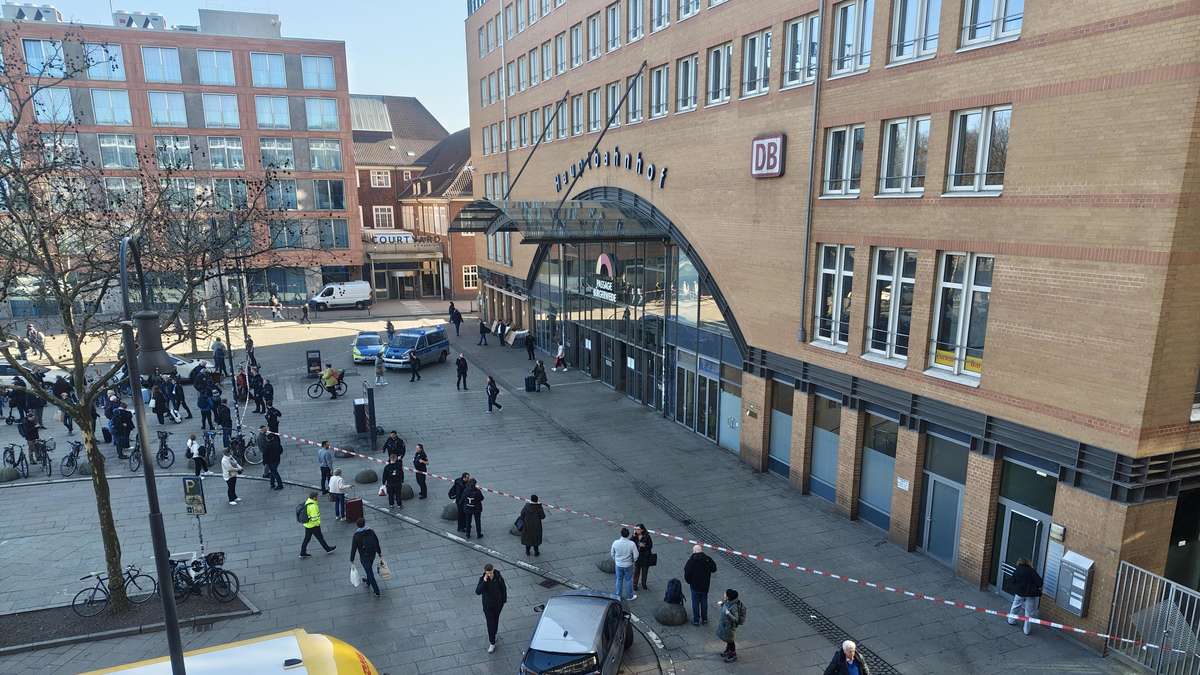
Bremen Main Station Evacuated Over Bomb Scare, Intensive Probe Launched
In a tense evening that saw one of Germany's vital transport hubs grind to a halt, Bremen Main Station (Hauptbahnhof) was subjected to a full evacuation and extensive lockdown following a credible bomb threat. The incident, which unfolded late on a Wednesday evening, brought train traffic to a standstill and left thousands of travelers stranded, underscoring the serious nature with which authorities approach potential security risks. The swift and decisive action by federal and state police, deploying a comprehensive array of resources, ultimately led to an all-clear declaration, but not before a thorough and meticulous search operation had been completed.
The incident began when an alleged Bombendrohung Bremen Hauptbahnhof was reported to a police service in Mecklenburg-Vorpommern. The nature of the call, stating that explosives had been placed within Bremen's central station, immediately triggered a high-level security response. Authorities wasted no time, initiating a large-scale evacuation of the station building and surrounding areas. This immediate response is a testament to the stringent safety protocols in place at major public facilities, where the potential for harm necessitates an abundance of caution, regardless of the perceived credibility of a threat. The initial hours of the operation were marked by uncertainty and significant disruption, as police and railway personnel worked tirelessly to manage the unfolding situation and ensure public safety.
The Incident Unfolds: Evacuation and Widespread Disruption
The call reporting the alleged bomb threat arrived at approximately 12:45 PM on Wednesday. While the precise details of the threat remain part of an ongoing investigation, its communication was sufficient to prompt an immediate and extensive response. Federal police, responsible for security at train stations, quickly took charge, sealing off the entire Bremen Hauptbahnhof area. All individuals present within the station – passengers, staff, and visitors – were instructed to evacuate without delay. The suddenness of the evacuation, particularly during a busy time, naturally led to scenes of confusion, but the orderly execution by security personnel helped manage the flow of people away from the potential danger zone.
The impact on public transport was immediate and severe. Deutsche Bahn, Germany's national railway company, announced via social media that all train services to and from Bremen Hauptbahnhof were suspended. This meant that long-distance and regional trains were either halted at preceding stations, rerouted, or experienced significant delays. For many travelers, this disruption meant extended waits, missed connections, and the scramble to find alternative transportation. Buses were reportedly organized to transport passengers to an alternative location, though the full extent of the travel disruption continued for hours even after the immediate danger had passed. Such events highlight the interconnectedness of modern transport networks and how a single point of failure can cascade through an entire system.
The decision to halt all rail traffic is never taken lightly, as it has significant economic and logistical consequences. However, the paramount concern in such situations is always human life. The Bombendrohung Bremen Hauptbahnhof necessitated this extreme measure, reflecting the zero-tolerance policy towards any potential threat to public safety at critical infrastructure points. For more details on the resolution, click here.
The Meticulous Investigation: Search, Discovery, and Resolution
With the station evacuated and secured, the focus shifted to the painstaking task of searching for any explosive devices. This phase of the operation involved a highly coordinated effort utilizing specialized units and advanced technology. Explosives detection dogs, known for their acute sense of smell, were deployed to systematically sweep through the vast station premises, including platforms, waiting areas, shops, and other public spaces. These canine units are an invaluable asset in bomb threat scenarios, capable of identifying even trace amounts of explosive materials.
Adding another layer of sophistication to the search was the deployment of bomb disposal robots. These remotely operated devices are crucial for inspecting suspicious items from a safe distance, minimizing risk to human personnel. During their search, officers and specialized units discovered an item that initially raised suspicion: a thermos flask left unattended on a platform bench. Given the context of the bomb threat, any unidentifiable or abandoned object immediately becomes a potential hazard. The robot was used to approach and X-ray the thermos flask, a non-invasive method to determine its contents without direct human contact.
Fortunately, the examination confirmed that the thermos flask was entirely harmless and contained no explosive materials. Police subsequently stated that there was no apparent connection between the abandoned flask and the original bomb threat. This discovery, while relieving, also underlines the challenges faced by emergency services – every suspicious item must be treated with the utmost seriousness until proven otherwise. Following the comprehensive search, which did not uncover any other dangerous items, the police declared the area safe. The Bombendrohung Bremen Hauptbahnhof was officially given the all-clear, and the station was reopened to the public in the early hours of Thursday morning. Read more about the harmless discovery here.
Broader Implications and Security Protocols
While the Bremen incident thankfully concluded without harm, it serves as a stark reminder of the persistent security challenges facing major public spaces globally. Bomb threats, whether credible or false, place immense strain on emergency services and cause significant disruption to daily life. The legal ramifications for making such threats are severe. German law considers such actions a "Störung des öffentlichen Friedens durch Androhung von Straftaten" (Disturbance of public peace by threatening crimes), which carries heavy penalties including significant fines or imprisonment.
The incident also brought to light a similar occurrence in Augsburg, where the Hauptbahnhof was also evacuated due to a bomb threat around the same time. German police are actively investigating whether there is any connection between the two incidents, highlighting the potential for coordinated threats or a copycat effect. This situation underscores the importance of inter-agency cooperation and information sharing across different regions to identify patterns and perpetrators.
Modern security protocols at transportation hubs are designed to be multi-layered, combining overt measures like uniformed patrols and surveillance cameras with covert intelligence gathering and rapid response capabilities. The use of K9 units and bomb disposal robots exemplifies the continuous evolution of these protocols, integrating technology to enhance safety and efficiency in crisis management. These systems are constantly refined based on real-world incidents, aiming to create environments that are both secure and accessible for millions of daily commuters and travelers.
Navigating Disruption: Tips for Travelers
Being caught in an evacuation or major disruption like the Bombendrohung Bremen Hauptbahnhof can be a stressful experience. Here are some practical tips for travelers to navigate such situations:
- Stay Calm and Follow Instructions: Your safety is the priority. Always listen to and comply with instructions from police, railway staff, and emergency services.
- Use Official Information Channels: Rely on official sources for updates, such as police press releases, railway announcements (Deutsche Bahn app, website, Twitter), and local news. Avoid spreading rumors from unverified sources.
- Plan for Delays: Assume significant delays and potential cancellations. If possible, have a backup plan for your journey or accommodation.
- Communicate with Loved Ones: Inform family or friends of your situation and any changes to your travel plans once you are safe.
- Know Your Rights: Familiarize yourself with passenger rights regarding delays or cancellations. Railway companies often provide compensation or alternative travel arrangements in such circumstances.
- Be Vigilant: While not panicking, always be aware of your surroundings. Report any unattended bags or suspicious behavior to staff or police, but do not attempt to intervene yourself.
The Bremen Main Station incident is a powerful example of how public safety and efficient transport systems are intertwined. While the threat proved false, the response was very real, demonstrating the unwavering commitment of authorities to protect citizens and maintain order. The rapid evacuation, thorough search, and eventual all-clear provided reassurance that Germany's security apparatus is prepared to respond decisively to any challenge, however daunting.